
Light Art - one object, many atmospheres
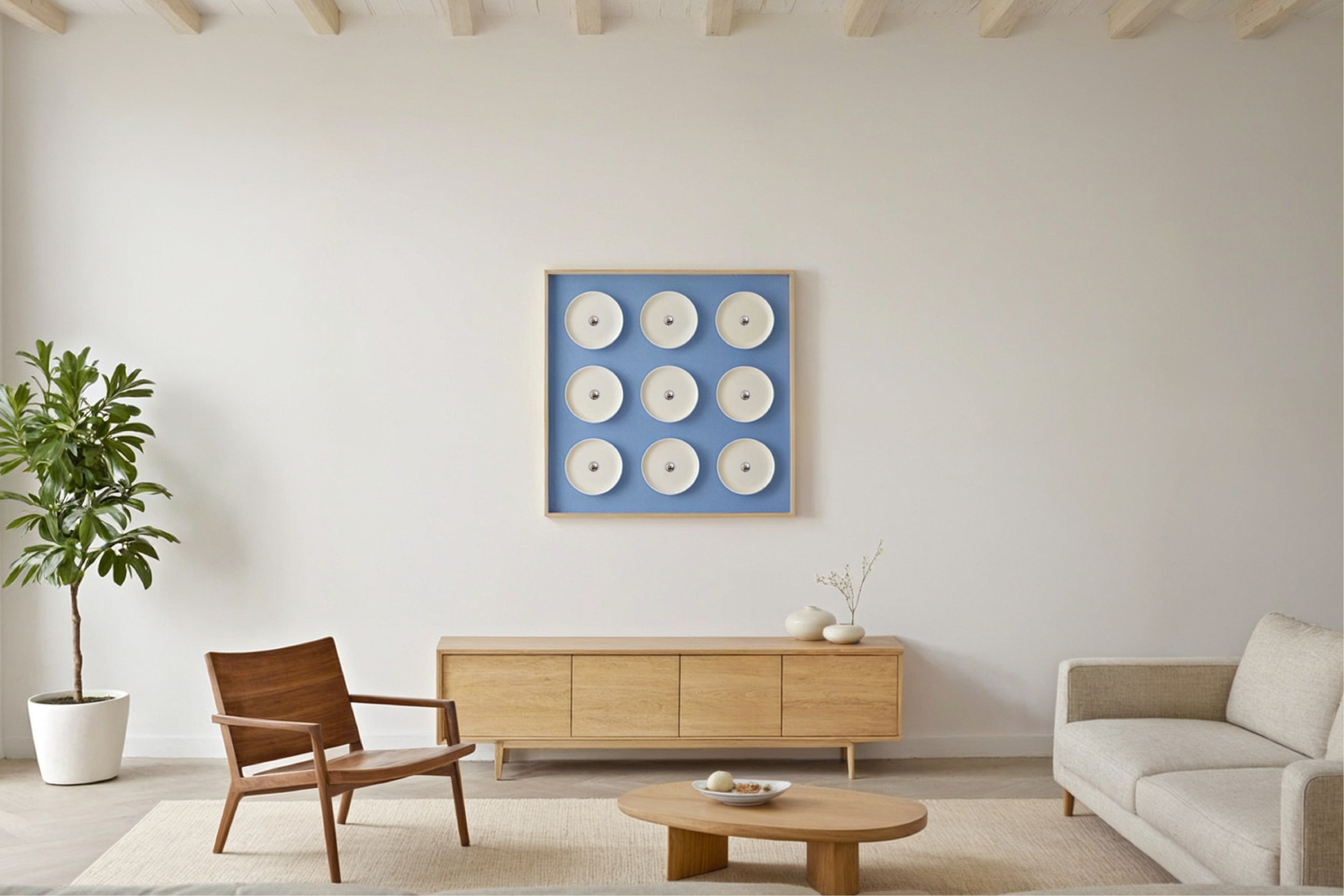
No matter if it`s night or day, the 3x3 creates a unique atmosphere. The interplay of light and shadow transforms the space, evoking different moods and emotions. It invites you to experience the beauty of light in a new way - with 3 different light patterns controlled via smartphone app. The 3x3 is not just a lamp, but a piece of light art that brings warmth and ambiance to any room.
Story — Background
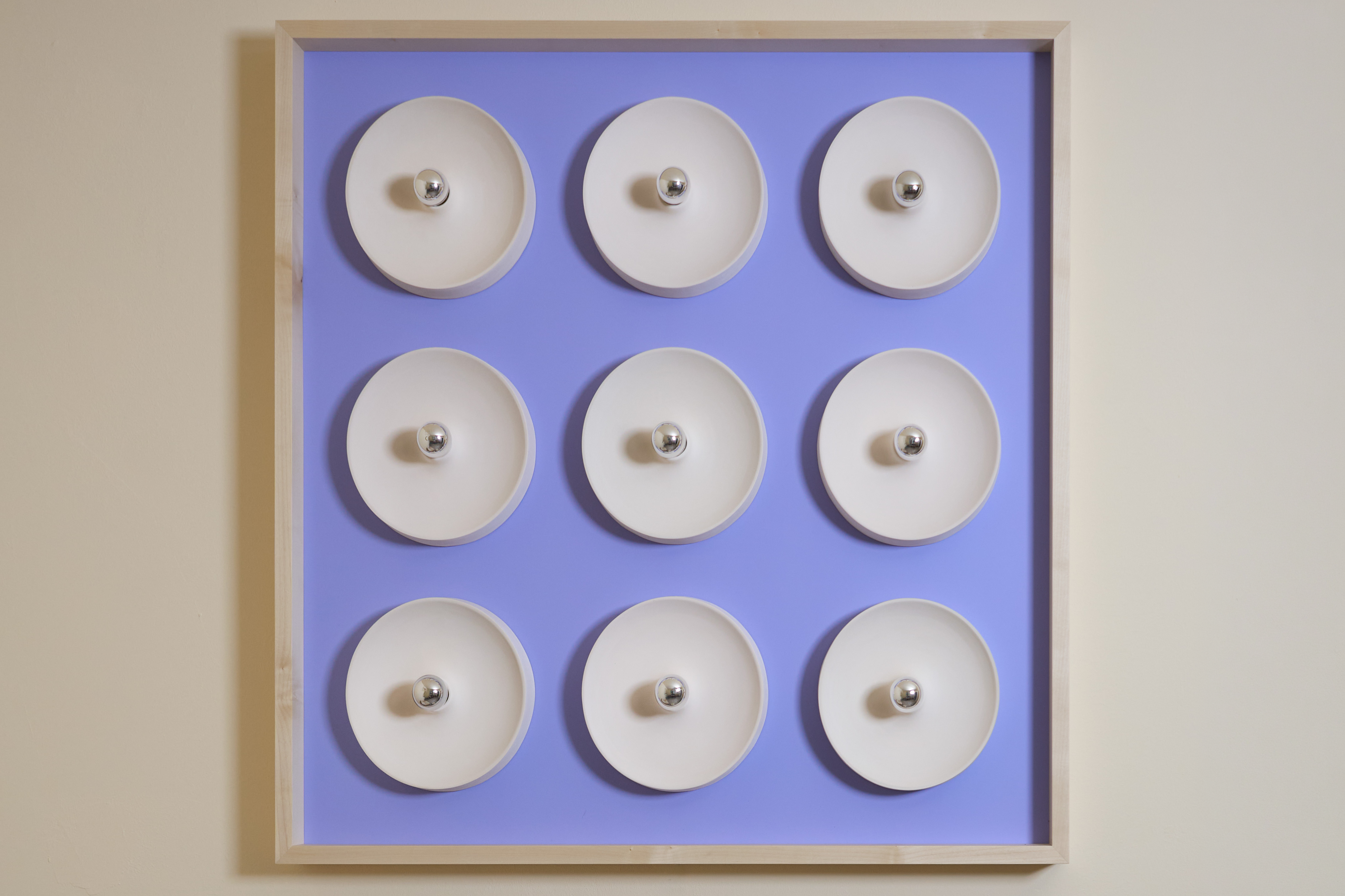
The 3×3 did not begin as an idea. It emerged through evolution.
In 2023, the ceramic lamp shade was already in development. A slip-cast mold was created from a solid piece of clay — built by hand. The first casts failed due to a mistake within the mold: the center cone could not release. The issue was solved by cutting out a section of that cone in the center, precisely where the light fixture would later be fitted.
With the mold resolved, the first lamp shades were produced and bisque fired.
Glazing became the next challenge. Achieving an even coat without bubbles or visual imperfections required a slower process — patience during layering, taking time to correct overlaps, and sometimes waiting a full day before firing to avoid glaze crawling. Moisture could cause the glaze to pull away, leaving unglazed areas and a surface resembling orange skin.
Once the first shades were finished with a glaze quality that felt right, they were shown at a handmade market. For that event, a one-by-one meter wooden board was built, holding nine shades in a 3×3 layout, each fitted with a light fixture and powered by a battery pack so the shades could be seen in action. It was not intended as a classical product display, but as a way to show the history — the story and the struggles behind the object.
This setup marked the beginning of something else: the 3×3 arrangement created new shadow patterns, because the light sources interacted with one another. After the fair, experimentation continued through switching certain lights on and others off — and that was the moment it became clear that this was more than a display.
Development — Process
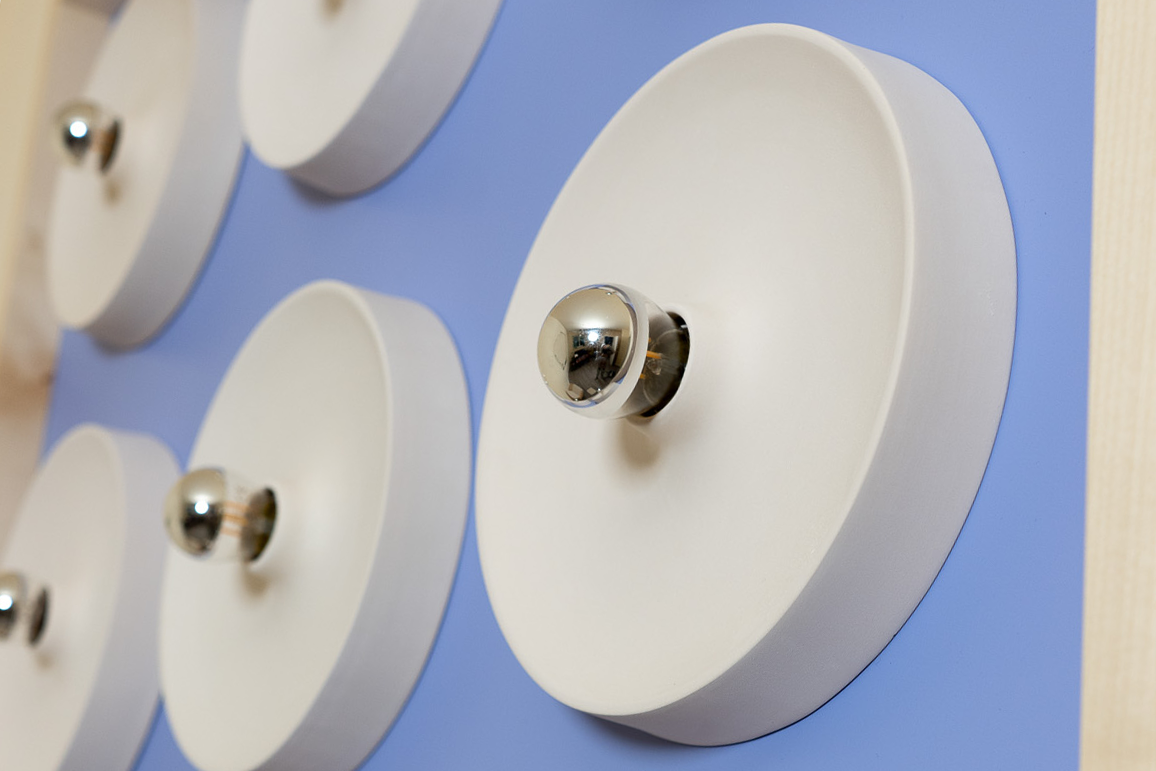
The proof of concept was realised through a functional prototype. Loose cables, temporary electronic connectors, and modular components allowed different light patterns to be tested while new parts were gradually integrated.
Once the electronic system was resolved, a control unit was incorporated to enable operation through smart home integration or an app, allowing three distinct light modes to be switched. With the technical foundation defined, the final CAD files were developed — covering the light fixtures, the mechanical fasteners for the ceramic shades, and the structural frame required to transform the prototype into a finished object.
Throughout the design phase, sustainability and repairability were central considerations. No glued connections were used; all elements are mechanically assembled to allow maintenance, replacement, and long-term use.
Materials were selected with durability and longevity in mind: an aluminium composite surface to mount the shades and light fixtures, a solid maple wood frame, and a two-component matte finish designed to withstand years of use while allowing easy cleaning to preserve the object over time.
All components were manufactured in Germany and assembled by hand, resulting in a singular light work — the 3×3.
- Iteration 01 — Material Exploration
- Iteration 02 — Light Study
- Iteration 03 — System Integration
Finished Product — How it acts
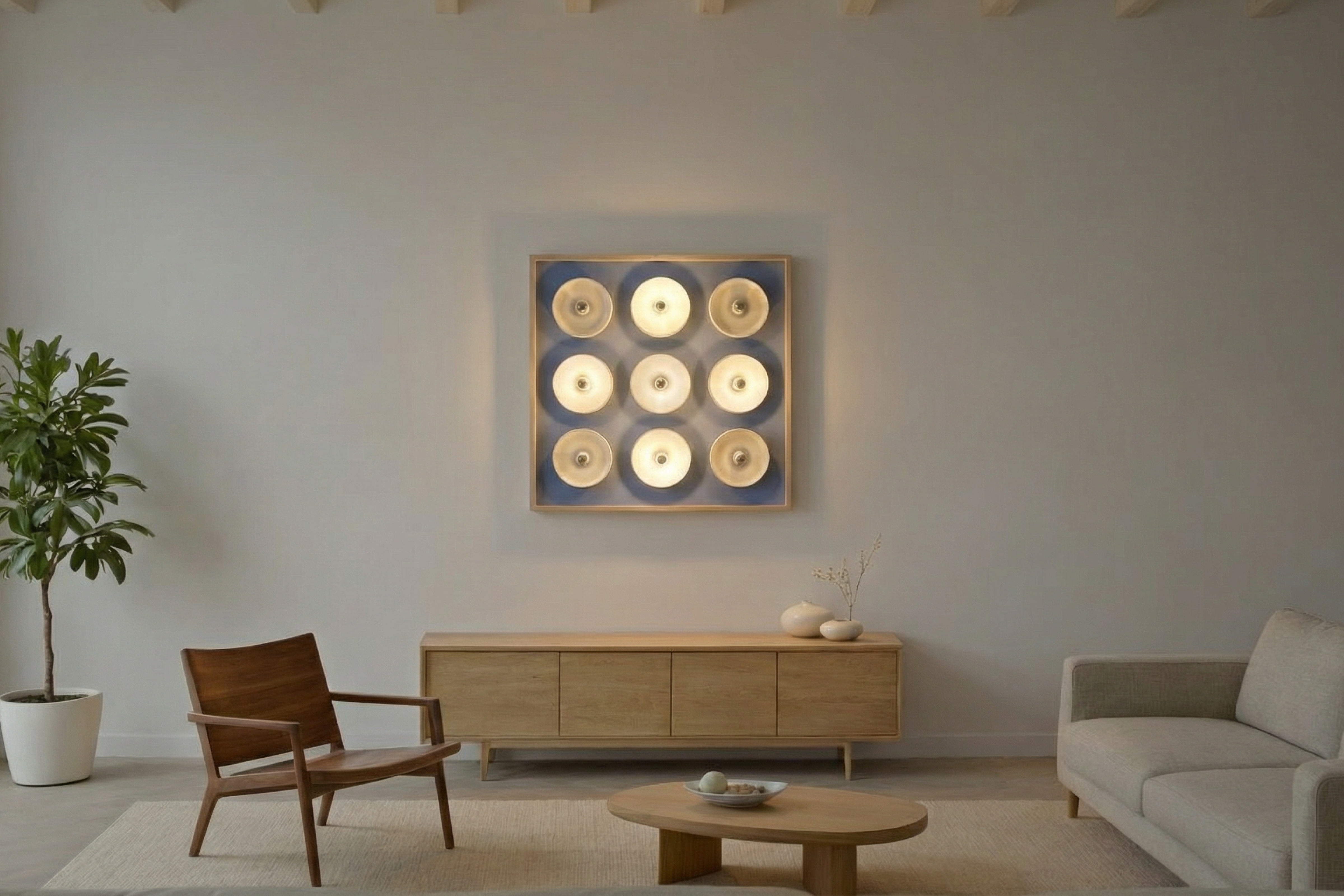
The 3×3 is not only a light.
During the day, when it is turned off, it exists as an artwork. Material, colour, and the structured layout create a visual presence that holds attention — quiet, but magnetic.
At night, the object comes to life. Illumination introduces atmosphere, setting a tone within the room and creating a warm, enveloping light environment.
It is not just a functional source of light because it carries identity. The object has a name. The light patterns have names. This transforms the experience from passive use into interaction.
Its presence is not fixed. The system allows different bulbs to be fitted, and the pattern configurations create a wide spectrum of possible atmospheres. The object can shift between moods, intensities, and spatial effects depending on how it is configured.
It is a constant evolution within a defined structure.
More than a light, it becomes a companion to space.